
Dwell time sounds like a jargon term, but it’s simply the gap between a reader clicking from a search result to your post and then returning to the results (or staying to explore more). In plain English: did your article hold attention long enough to feel worth it? For small blogs, that signal is gold. It helps you learn what topics and structures genuinely serve readers—and, indirectly, it can influence how often your pages get discovered. If you are new to the topic, start with our overview of what web analytics is and why it matters.
Dwell time vs. similar metrics (quick sanity check)
- Dwell time: Time a searcher spends on your page before going back to the search results. It’s a proxy for “answer satisfaction.”
- Time on page / average engagement time: How long the tab stays active. Useful, but doesn’t know where the visitor came from or went next.
- Bounce rate: A single-page visit. Not always bad—someone might get a quick answer and be delighted.
- Scroll depth: How far someone traveled down the page—great context for understanding why dwell time is high or low.
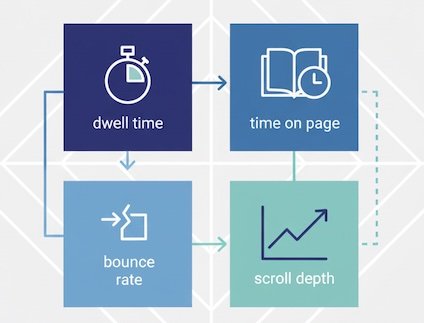
Think of dwell time as the story: did the visit feel worthwhile? The other metrics are the clues that explain that story.
Why small blogs should care
- Trust compounder
When posts consistently hold attention, readers are likelier to subscribe, bookmark, and return. That momentum compounds, even with modest traffic. - Discovery booster (indirectly)
Search systems try to show results that satisfy searchers. While the exact signals are opaque, content that clearly answers a query—and keeps people engaged—tends to get more visibility over time. - Editorial compass
Dwell time patterns reveal which topics, angles, and formats match audience intent. That saves you weeks of guessing. Pair this insight with Google Trends for topic ideas to double down on what works.
The reader’s journey that shapes dwell time
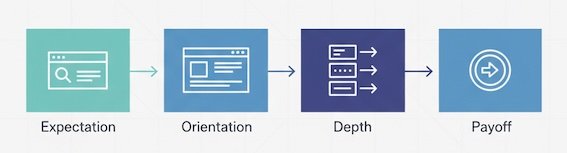
- Expectation (snippet + headline): Did the promise match the need?
- Orientation (first screen): Can readers see the answer path—summary, subheads, proof?
- Depth (middle): Are details structured so people can skim and dive in?
- Payoff (end): Is there a clear “next best thing” to do—read related posts, save, share?
If any stage breaks, dwell time usually dips.
A simple interpretation table
| Signal | What good looks like | What it usually means | What to try next (no tech needed) |
|---|---|---|---|
| Headline–content match | Readers stay past the intro; low early exits | Promise matches delivery | Tighten opening: confirm the problem, preview the answer, remove fluff |
| Read-time vs. word count | Short posts: ~45–90 sec; long posts: proportionally longer | Right depth for the question | For how-to topics, add a concise “Key takeaways” box near the top |
| Scroll depth | Most readers reach first 60–70% of the article | Structure flows, questions get answered in order | Use scannable subheads and one point per paragraph |
| Return readers on similar topics | Repeat visits to the same theme grow over weeks | You’ve found a winning angle cluster | Plan a mini-series or hub page that connects the best pieces |
| Saves/shares | Steady bookmarks, forwards, or social saves | Long-tail usefulness | Create a printable or downloadable summary of the core insights |
| Exit to search vs. click to an internal page | Healthy internal next-click rate | You resolved the query and sparked curiosity | Offer 1–2 “read next” links tailored to intent, not a generic list |
Use comparisons, not absolutes. Judge each post against your own median to spot what’s truly working. The right analytics tool makes these comparisons easy.
What boosts dwell time (without getting technical)
- Match the real question, not just the keyword
Readers search for an outcome (e.g., “quick meal plan for busy parents”), not a term. Lead with the outcome; define terms only if needed. - Start with value, not context
A short summary, a checklist, or a bold answer at the top shows you respect the reader’s time. You can add nuance right after. - Guide with structure
Clear subheads, short paragraphs, and callouts (tips, examples, pitfalls) reduce cognitive load. Readers keep going when the path is obvious. - Show, don’t just tell
Concrete examples, tiny case notes, or quick comparisons turn abstract advice into something usable. - Offer one relevant next step
When you resolve the main question, suggest a single logical follow-up article. Too many choices create decision fatigue and exits. Understanding your new vs returning visitor balance can help you tailor those next steps.
Common dwell-time patterns and what they’re telling you
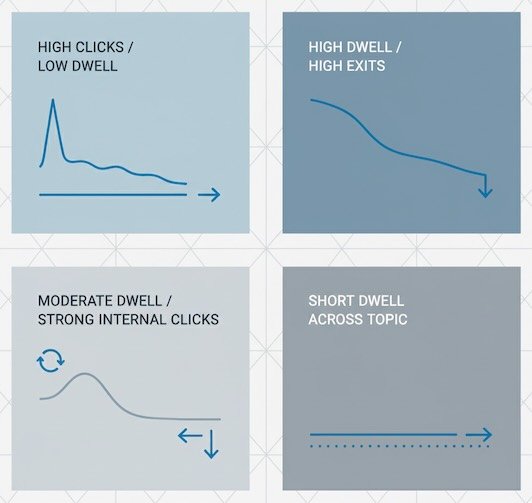
- High clicks, low dwell time
Your headline is enticing, but the article veers off, buries the answer, or leans on fluff. Tighten the intro and bring the core answer forward. - High dwell time, high exits
You fulfilled the searcher’s intent completely—great. Add a natural follow-up (“next question people have”) to funnel satisfied readers deeper. - Moderate dwell, strong internal clicks
Readers found your piece good enough to continue, even if it wasn’t a deep read. Build a two-post path: a primer followed by a deep dive. - Short dwell across a whole topic
The angle might be off for your audience. Re-examine the searcher’s job-to-be-done: Are you solving the right problem?
Light benchmarks (directional, not rules)
- Short answers (≤800 words): Many satisfied visits will wrap in ~1 minute. If your intro is crisp and the answer clear, that can be perfectly healthy.
- In-depth guides (1,500–2,500 words): 3–6 minutes signals good traction—if the scroll pattern is smooth.
- Skimmable resources: Dwell time may be shorter if visitors jump to a section and then move on. That’s fine—ensure key info is easy to grab.
Remember: Some readers want a quick fix, others a deep dive. Dwell time should align with the intent of the page.
Editorial tweaks that pay off
- Promise audit: Compare your title and first 100 words to the core question. If the answer isn’t obvious, rewrite the opening.
- Section-first writing: Draft subheads first, then fill them with the minimum helpful detail. It naturally reduces rambling.
- Example ratio: Every major claim gets a small example or micro-case. Examples anchor attention.
- Trim the throat-clearing: Delete the first paragraph of any section if it only warms up the point—start with the point.
A mini scoring rubric you can reuse
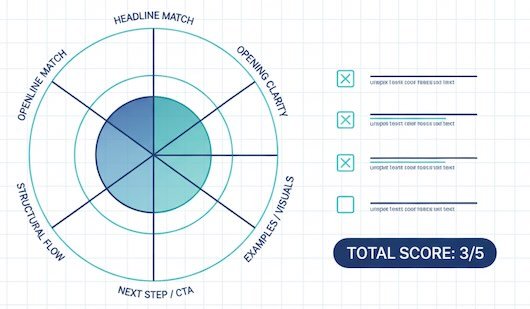
Give each post 0–2 points for five items:
- Headline–content match
- Opening clarity (fast answer/summary)
- Structural flow (scroll to 60–70%)
- Concrete examples present
- Logical next step offered
- 8–10 points: Build a cluster around this angle.
- 5–7 points: Keep the topic; strengthen opening and examples.
- 0–4 points: Reframe the question or retire the angle.
Pitfalls to avoid
- Chasing only “time for time’s sake”: Padding increases dwell time but erodes trust. Depth should serve clarity, not word count.
- Treating bounces as failure: A single-page visit can still be success if the question was quick. Look at dwell + scroll context.
- One-post judgments: Trends beat single datapoints. Evaluate in batches of 10–20 posts.
Bottom line: Dwell time is the reader’s verdict on value. For small blogs, that verdict is a compass—pointing you toward topics, angles, and formats that genuinely help people. Use it alongside read time, scroll depth, and next-click patterns to shape an editorial plan that keeps readers engaged today and brings them back tomorrow.

Ethan Lewis is an SEO strategist and web analytics consultant with over 8 years of experience helping businesses turn data into growth. He specializes in privacy-compliant analytics, technical SEO, and conversion optimization. At Statlyzer, Ethan writes in-depth guides that make complex analytics topics accessible to marketers and website owners.